Presented at the Combined GLAC 32 and SHEL 14 Conference on Thursday, April 30th, 2026
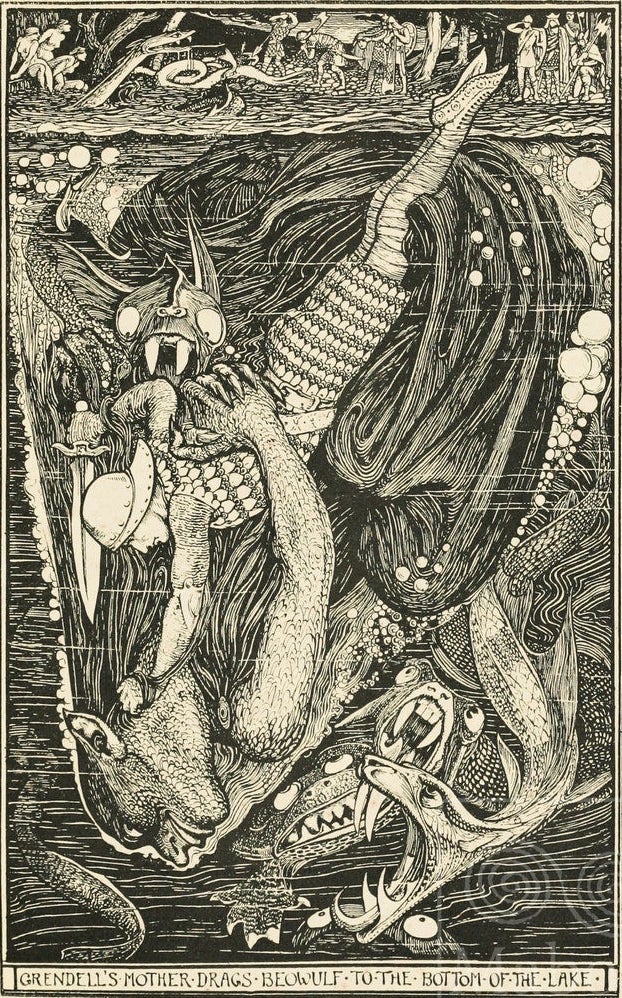
Jeffrey Jerome Cohen defines what a monster is when he states, “The monster is born only at this metaphoric crossroads, as an embodiment of a certain cultural moment—of a time, a feeling, and a place. The monster’s body quite literally incorporates fear, desire, anxiety, and fantasy (ataractic or incendiary), giving them life and an uncanny independence” (4). And this is how Grendel’s mother in Beowulf’s has been read traditionally. For example, Jane Chance situates Grendel’s mother as the antithesis of what a medieval woman should be and fear becoming in her landmark article, “Grendel’s Mother as Epic Anti-Type of the Virgin and Queen” (95–108). Instead of fulfilling the role of peaceweaver or cupbearer, Grendel’s mother takes on the masculine role of avenger when she kills Æschere as compensation for her son’s death (Beowulf, lines 1251-1382). According to Chance, this inversion of gender norms embodied by Grendel’s mother is exactly what makes her so monstrous (95–108).
But what if we’ve overstated her monstrosity? What if we’ve allowed our modern biases about violating gender norms color our interpretation of Grendel’s mother?
But what if we’ve overstated her monstrosity? What if we’ve allowed our modern biases about violating gender norms color our interpretation of Grendel’s mother? These are the questions M. Wendy Hennequin asks in her article, “We’ve Created a Monster: The Strange Case of Grendel’s Mother” (503–23). She argues that “Our cultural institutions (including academia) usually react to powerful female figures, especially those not fitting the ‘proper’ moulds and performing their gender correctly, by condemning them as unwomanly or evil” (Hennequin 521; emphasis added). Hennequin then goes on to make a compelling case for why the text of Beowulf doesn’t support the excessive demonization of Grendel’s mother that we have seen in decades of scholarship. She argues that the misrepresentation of Grendel’s mother is due to “faulty translations, critical tradition, and gender expectations” (Hennequin 518). In particular, she points out how the definition of aglæca has shifted in recently scholarship from “hero” or “monster” to “awesome opponent, ferocious fighter,” allowing for a much more neutral interpretation of Grendel’s mother as an aglæcwif (Hennequin 510).
As suggested by Hennequin, if we accept that the monstrosity of Grendel’s mother has been overstated, then scholars can more clearly recognize the nobility of Grendel’s mother and reread her role as an acceptable alternative to that of peaceweaver rather than its antithesis (521). In this paper, I argue that under certain circumstances, avenging warrior is an acceptable, and even honored, role for a woman in early English society, and that medieval audiences would not have interpreted Grendel’s mother as being more monstrous due to fears surrounding this particular gender role slippage. And while Grendel’s mother might be a “monster” in the sense that she isn’t human, her honored status as a warrior and her supernatural abilities make her more closely related to valkyries than the terrifying creatures we have traditionally associated with her.
Women Warriors
Chance claims, “In the first part of the female monster’s section, the idea is stressed that a kinswoman or mother must passively accept and not actively avenge the loss of her son” and then she cites the story of Hildeburh to support that statement (99–100). While Hildeburh’s role as peaceweaver would complicate her avenging her son and brother, her situation is different than Grendel’s mother. No one expects Hildeburh to demand wergild or pursue a bloodfeud because her husband Finn is still alive at this point in the story. It is his responsibility to avenge their son’s death, just as it is the responsibility of her Danish male relatives to avenge her brother’s death, which they eventually do when the Danish Hengest wipes out the Frisians and returns Hildeburh to her family of origin (Beowulf, lines 1063-1159). Grendel’s mother, on the other hand, has no male relatives and the Beowulf poet emphasizes this point: “nō hī fæder cunnon,” (“they knew not of a father”) (Beowulf, line 1355b). Since she has no male kinsmen, Grendel’s mother isn’t bound to passive mourning like Hildeburh. Instead, Grendel’s mother and the society around her expect her to put on the mantel of warrior in this bloodfeud, and even honor her for it.
Grágás: The Baugatal
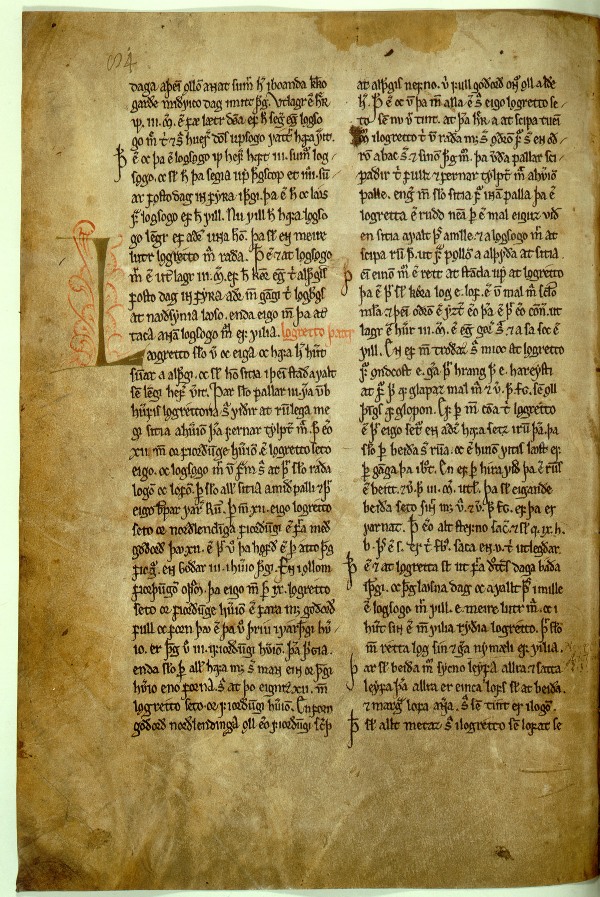
To begin, there is legal precedent for a woman to take on the role of a man in demanding wergild among Beowulf’s Nordic cousins. According to Clover, “The earliest Icelandic legal codex, Grágás, contains two schedules of compensation for slayings: Baugatal and Vígslóði” (84). The Baugatal is probably the oldest and outlines the payment of wergild based on how closely related the recipient is to the person who is slain. It clearly explains how a woman should step into the role of a man if there is no male relative to give or receive wergild:
Sú er ok kona ein er bæði skal baugi bæta ok baug taka ef hon er einberni. En sú kona heitis baugrygr. En hon er dóttir ins dauða, enda sé eigi skapþiggjandi til hǫfuðbauges en bætendr lifi, þá skal hon taka þrímerking sem sonr, ef hon tók eigi full sætti at vígsbótum til þess er hon er gipt; enda skulu frændr álengr taka. Nú er hon dóttir veganda, en engi er skapbætendi til bætendi til hfuðbaugs, en viðtakendr sé til, þá skal hon bæta þrímerkingi sem sonr til þess er hon kømr í vers hvílu; en þá kastar hon gjǫldum í kné frændum.
There is also one woman who is both to pay and to take a wergild ring, given that she is an only child, and that woman is called “ring lady.” She who takes is the daughter of the dead man if no proper receiver of the main ring otherwise exists but atonement payers are alive, and she takes the three-mark ring like a son, given that she has not accepted full settlement in compensation for the killing, and this until she is married, but thereafter kinsman take it. She who pays is the daughter of the killer if no proper payer of the main ring otherwise exists but receivers do, and then she is to pay the three-mark ring like a son and this until she enters a husband’s bed and thereby tosses the outlay into her kinsman’s lap. (qtd. in Clover 85)
While Clover’s focus is on maiden warriors and how they can step into the role of a son, this section from the Baugatal clearly shows that women are expected to fulfill the role of a man in the absence of any male relatives. While this law does become complicated if a woman is married, the implication is that the married woman becomes a part of husband’s family, and therefore the wergild would skip her and go to the next closest kinsmen from her family of origin. However, if the slain person is her son and there are no other close male relatives on the father’s side, then I think it is safe to assume that the closest female relative (a daughter, mother, sister, etc.) could demand wergild—it is just an extremely rare situation.
Bloodfeud vs. Wergild
Up until this point, we have been discussing wergild, but what about a bloodfeud? Grendel’s mother does not demand wergild, but rather enacts a bloodfeud, a life for a life, by killing Æschere (Beowulf, lines 1251-1382). Clover explains, “Nowhere in Grágás are the rules of bloodfeud spelled out. In Iceland, as elsewhere, these belong to the unwritten law” (85). However, wergild is implemented in the hopes avoiding the never-ending cycle of bloodfeud, so we can follow the same logic to infer who is responsible to enact a bloodfeud. Whitaker provides a case-study from Albania, where bloodfeud has continued until relatively recent times, and he even explains the role women can take in a bloodfeud. According to Whitaker:
‘When all of her brothers had been killed, she might herself assume the masculine role, abjure marriage, and take on the duty of exacting revenge for her siblings.’ The sworn virgin then assumed male dress, and ‘having taken such an oath she might not revert to her earlier feminine role, but would thenceforth be treated solely as a man, killing and being killed in the bloodfeud and thereafter counting as a full life [as opposed to the usual half] in the calculation of blood money.’ (qtd. in Clover 83)
As we can see here, a woman can take on the role of a man to enact a bloodfeud and still have the respect of her community as long as there are no male relatives. After all, if there is no one else, then why shouldn’t a woman avenge her kinsmen?
Women Warriors in Literature
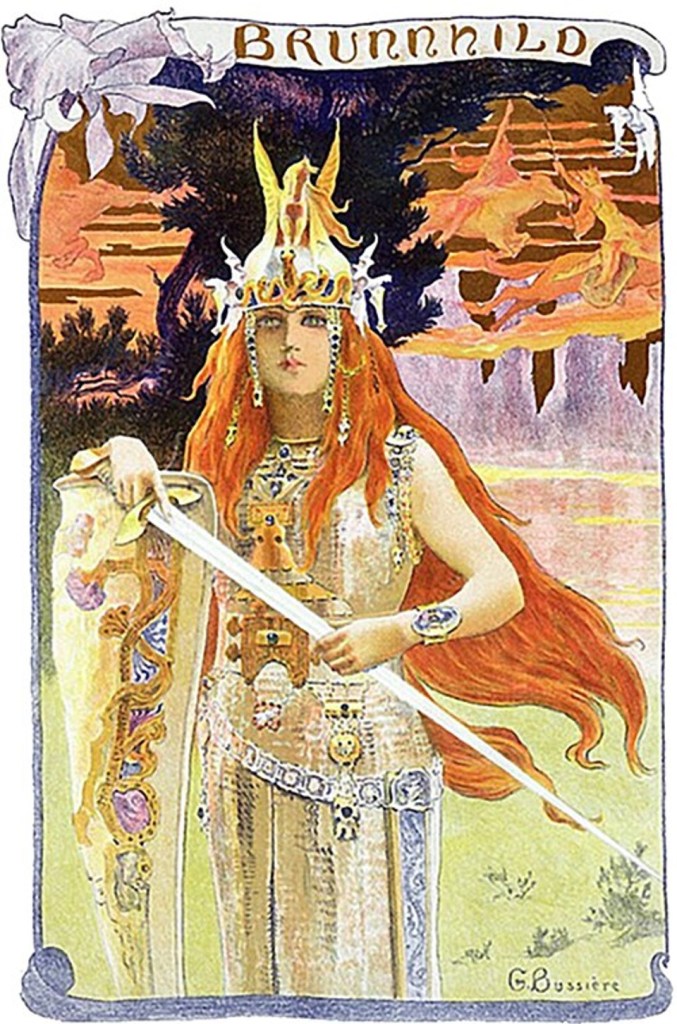
However, we again have the assumption of a maiden warrior enacting a bloodfeud, not a mother. Yet, in Germanic literature, Clover explains that many maiden warriors start out swearing against matrimony (as described previously) but often do marry and have children (Clover 81). The most famous of which is Brynhildr, who appears in many Old Norse texts, including the Volsunga Saga and the Poetic Edda (Clover 81–82). Brynhildr is literally a valkyrie who is condemned to live as a mortal and will only marry the man who is able to pass through the flames surrounding her while she is in an enchanted sleep. She eventually is tricked into marriage and has a daughter (Clover 81–82). There is also Ladgerda from Saxo Grammaticus’ Gesta Danorum. In this tale, Ragnar meets Ladgera while she is leading a band of warrior women. He falls int love with her, she resists, they eventually marry and have a son. Gyrid is another one of these maiden warriors who “finds herself at the end of a family line,” sees that no one is worthy, and becomes a warrior maiden to avoid marriage (Clover 81). She does eventually marry, and years later, she draws on her previous experience as a maiden warrior, “dons male clothing and enters a battle next to her son” (Clover 81). As a heroine in Germanic literature, Gyrid is one in a long line of respected warrior-maidens who become mothers. She even continues to engage in the masculine acts of warfare after getting married and having children.
The Gerdrup Grave
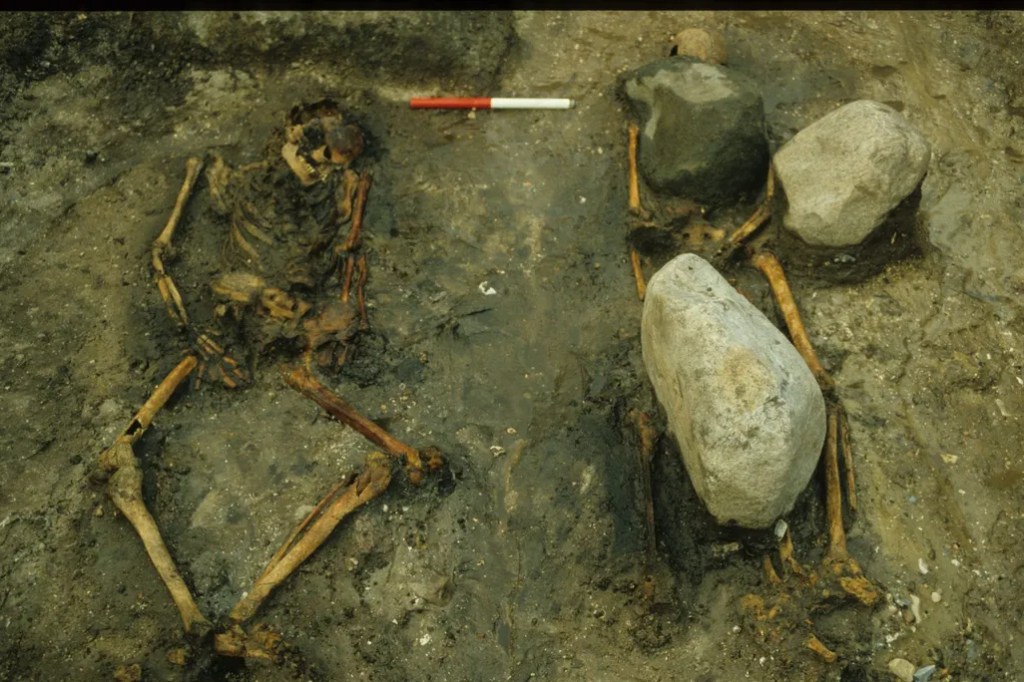
While Brynhildr, Ladgerda, and Gyrid are literary figures, there is historical precedence for warrior women in a burial site in Denmark. At an excavation at Gerdrup (near Roskilde, Denmark), archeologists discovered the grave of a warrior woman. Fell explains, “The woman’s skeleton is placed carefully with two artefacts resting on it and one beside it; on it are an iron knife and a needlecase; beside it a spear. The woman is estimated to have been about forty years old” (Fell et al. 130). Typically, burial sites from this time period would have men buried with weapons and women buried with domestic goods, such as the needlecase, reflecting the tools that they used in life. While extremely rare, the fact that at least one burial site of a warrior woman exists with a spear and dagger placed alongside a needlecase opens the possibility for women in early England and Scandianavian countries. Moreover, the Gerdrup woman’s grave was treated with great care, while the man buried beside her was treated much less carefully, revealing that this woman was a respected figure by those who buried her.
Rethinking Grendel’s Mother
The way Grendel’s mother is treated by the other characters in Beowulf follows this pattern of legal, literary, and archeological evidence provided for woman warriors. Both Beowulf and Hrothgar treat Grendel’s mother with respect when speaking about her. While she is referred to as “brimwyl[f]” (“sea-wolf”) and closely associated with the monstrous descendants of Cain, she is always placed in the honorable framework of bloodfeud (Beowulf, lines 1261-1265, 1506). The first time she is even alluded to, the Beowulf poet underscores her role as avenger: “Þæt ġesȳne wearþ, / wīdcūþ werum þætte wrecend þā ġȳt / lifde æfter lāþum, lange þrāge, / æfter gūðċeare;” (“That became evident, widely known to men, that an avenger still lived after the hostile one for a long time after a war-care;” emphasis added) (Beowulf, lines 1225b-1258a). In fact, the narrator and Beowulf both use masculine pronouns to refer to Grendel’s mother, mirroring how maiden warriors would shed their feminine identity to take on a masculine role as we saw in Whitaker’s explanation of maiden warriors earlier (see Beowulf, lines 1260a, 1497b, 1392b, 1394b; qtd in Chance 95). So, Grendel’s mother isn’t condemned in Beowulf, but rather honored and respected by the narrator and other characters for taking on a typically masculine role of avenger in a bloodfeud.
Ides Āglæċwīf: A Noble Woman, A Ferocious Fighter
Moreover, the language surrounding Grendel’s mother is respectful and courteous. She is called “ides āglæċwīf” (“a noble woman, a ferocious fighter”) by the Beowulf poet (Beowulf, line 1259a). While the definition of āglæċa has been much debated by scholars but has transitioned to the more neutral “awesome opponent, ferocious fighter” (as discussed previously), ides’ meaning is much more stable. According to the Dictionary of Old English Dictionary, ides means a woman in a general sense, but more often refers to a noble or respected woman (“ides, idese”). For example, in Beowulf, ides is used to refer to queens, such as Wealhtheow and Hildeburh (“ides, idese,” def. 4.a.i and 4.a.ii). In the Old English corpus, ides is used to refer to women like Eve, Judith, Hagar, and Sarah (“ides, idese”). Even when ides is used to refer to Cain’s wife, the text clarifies that she is a woman of high standing, a noble woman: “ides æfter æðelum” (“woman after a noble birth”) (“ides, idese,” def. 3.d.). In short, ides refers to a woman who should be respected.
More Than a Mere Woman
Bosworth Toller’s Anglo-Saxon Dictionary takes ides a step further. It defines ides as “A woman [it is a word little used except in poetry, and it is supposed by Grimm to have been applied, in the earliest times, like the Greek νύμφη, to superhuman beings, occupying a position between goddesses and mere women, v. D. M. 372]” (Bosworth, “ides”). This definition seems particularly apt for Grendel’s mother because she is a supernatural woman, not just a mortal woman. She is a much more formidable opponent than her son Grendel, so much so that Beowulf takes pains to arm himself that he didn’t before (Beowulf, lines 1442-1472), Beowulf’s sword cannot harm her (Beowulf, lines 1518-128), and as Hennequin points out, Beowulf has to be saved by divine intervention not once, but twice (508). Grendel’s mother certainly appears to be more than a mere woman in her fight with Beowulf.
Not Quite a Goddess
Helen Damico makes the connection to supernatural beings even clearer by connecting the Old English ides to closely related words in Old High German (idisi) and Old Norse (dísir). According to Damico, Grendel’s mother belongs to “a generic group of half-mortal, half-supernatural beings called idisi in Old High German, ides in Old English, and dís in Old Norse, plural, dísir” (176). Valkyries also belong among the dísir and are a good example for modern readers how the supernatural beings in class are “armed, powerful, priestly” and “function as arrangers of destinies and intermediaries between men and the deity” (Damico 176). Damico even states that “[s]ome of the dísir were believed to be ghosts who roamed and ruled the night and who were appeased by sacrifice,” which sounds remarkably like Grendel and his mother wandering the moors and ruling the night (Damico 176; Beowulf, lines 1345-1349). All of this is to say, if we take into account the respectful language used to describe her, her honorable justification for killing, and her linguistic connections to her semi-divine Germanic and Norse cousins, scholars could interpret Grendel’s mother as not only a supernatural monster, but as a respected supernatural being, somewhere between mere mortal and pagan goddess.
In conclusion, by rereading Grendel’s mother as not a monster, but as a supernatural being more closely resembling a valkyrie, we can more easily see how women in the early English period weren’t limited to the roles of peaceweaver or cupbearer; they could take on more masculine roles such as warrior or bloodfeud avenger while still being honored and respected by their communities. And if we recognize how harshly our modern biases have colored our previous interpretations of Grendel’s mother, we can see how much we’ve let our fears and anxieties about adhering to gender norms influence our scholarship, our professional, and our personal lives.
Sources
Bosworth, Joseph. “ides.” An Anglo-Saxon Dictionary Online, edited by Thomas Northcote Toller et al., Faculty of Arts, Charles University, 2014, https://bosworthtoller.com/53816.
Chance, Jane. “Grendel’s Mother as Epic Anti-Type of the Virgin and Queen.” Woman as Hero in Old English Literature, 1. ed, Syracuse UP, 1986, pp. 95–108.
Clover, Carol J. “Maiden Warriors and Other Sons.” Matrons and Marginal Women in Medieval Society, edited by Robert R. Edwards and Vickie L. Ziegler, Boydell & Brewer Ltd, 1995, pp. 75–87.
Cohen, Jeffrey Jerome. “Monster Culture (Seven Theses).” Monster Theory: Reading Culture, University of Minnesota Press, 1996, pp. 3–25. ProQuest Ebook Central, http://ebookcentral.proquest.com/lib/byu/detail.action?docID=310376.
Damico, Helen. “The Valkyrie Reflex in Old English Literature.” New Readings on Women in Old English Literature, edited by Helen Damico, Indiana UP, 1990, pp. 176–90.
Fell, Christine E., et al. “Viking Women in Britain.” Women in Anglo-Saxon England, British Museum Publications Ltd, 1984, pp. 129–47.
Fulk, R. D., et al., editors. Klaeber’s Beowulf and the Fight at Finnsburg. 4th ed., University of Toronto Press, 2014. Toronto Old English Series 21.
Hennequin, M. Wendy. “We’ve Created a Monster: The Strange Case of Grendel’s Mother.” English Studies, vol. 89, no. 5, Oct. 2008, pp. 503–23. https://doi.org/10.1080/00138380802252966.
“ides, idese.” The Dictionary of Old English, University of Toronto, 2026, https://indiv.dictionary.doe.utoronto.ca/doe/.



Leave a Reply